The Cost

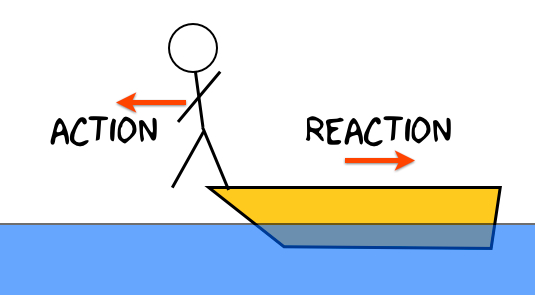
I was reading something recently and it said that there is no such thing as a free lunch. Everything comes at a cost. This is true. But to go deeper, I would suggest that in our lives, Newton’s Third Law of Motion is more apt: For every action there is an equal and opposite reaction. Not only is there no such thing as a free lunch, but everything we do has a response, not just in physics, but in life as well.

Everything I’ve done in my life has had an impact to my surroundings and or to myself, be it subtle or profound. This was a topic of discussion in my most recent session with my psychologist. I’ve been seeing a new psychologist for about four weeks now and I think it’s going well. He’s kind of a dick, but I like him. Here’s why:

     Doc: “What do you want to talk about today?”

     Me: “I don’t know, what do you want to know?”

     Doc: “That’s up to you, it’s whatever you want to talk about.”

     Me: “I don’t want to talk about anything. Why don’t you ask questions and I’ll answer them.”

     Doc: “Then why are you here?”

     Me: “Because I need to be.”

     Doc: “Ok. Then what do you want to talk about?”

Dick, right? No, quite the opposite. He’s making me think throughout the week of what I need to talk about instead of just seeing on my calendar that I have an appointment. This is an approach I had not experienced before. But I can see how it works. However, with this approach, there will be reactions. When I talk about something that happened, it causes me to think about it even after therapy. I spent time trying not to think about certain things, but there those things are again, rolling around in my head, bouncing off the walls of my mind. This is the reaction to this approach to therapy, I have to get it all out and deal with it and learn to put it back where it goes.

Same thing with my writing. I’ve shared a lot of stuff on my blog. Some of it good, some of it not so good. But some things will never be shared here. Each time I write about something, I experience the emotions again. The hardest one I’ve written was my post Battlefield (February 2016) where I walked you through my attempted suicide. It took six months after the attempt for me to be able to verbalize it like that. It was very rough. Re-living that time disrupted my sleep for days, changed my mood, and gave me a feeling of vulnerability. But on the other hand, it gave me an outlet. Writing has become my therapy. It may sometimes take me to bad places in my mind, but I’m getting it all out and learning how to put it back where it goes.

One of the most obvious reactions to any of my actions would be serving my country. I volunteered both times I deployed (once to Iraq, once to Afghanistan). The reactions for those actions are very profound. I traded my physical wellness and my sanity. I have problems with anger, relationships, crowds, driving, focusing, memory, anxiety, loud noises, and memory (ha ha, I put that in there twice because I still do have some of my sense of humor, though it’s probably darker than it’s ever been before). I can’t run anymore, I have problems breathing, and my body aches.

But the thing I miss the most is who I used to be. I used to always be able to find something good in most circumstances, make the best of any situation, and find something to enjoy in each day. I don’t see those things in me near as much anymore. I try. I fake it sometimes, but I’m far from the old me. I traded all of that that to go war. But I am still here and I know that some traded their whole lives to go war. I only traded part of mine. A lot of us that have traded part of our lives have had thoughts at one point or another that it would have been better to trade our whole life, instead of living with the pain and craziness of the reaction of our action. I was one of those people. I was one that tried to finish the job myself, like 22 other veterans a day do. I had a very hard time coming to grips with the fact that I was no longer the ‘me’ I used to be. I’m getting better with that now, but it has been a hard process to go through.

And I will continue to navigate this process. My life will continue to be subjected to Newton’s Third Law of Motion. I will continue to get things out and deal with them and learn how to put them back where they go. Thank you for taking the time to read the Story of My Life. I welcome your feedback.

Oh, and I have a lot of stuff to talk about during my next appointment with the doc.

Good day and God bless.

Dave

The Fear in the Eyes

During my time in Afghanistan I went on almost thirty missions from my home base. Sometimes to other bases within Kabul, sometimes to the opposite end of the country. We traveled in a variety of ways, including up-armored, non-tactical vehicles (NTVs), helicopters, and airplanes. On one mission that was very close to our home base, we walked. That was a wonderful experience, despite almost being run over by a motorcycle. I recorded the whole walk my camera that I strapped to my body armor. I found out later that the unit I was part of was not authorized to walk outside the gates. That caused quite a stir, eventually brining on policies and memos that everyone in our unit was made aware of, which ultimately changed the procedure by which our unit traveled when leaving the base. Some people work on policy change, I actually caused it.

For almost every trip we went on there was always some cause for concern. Travel is dangerous enough in Afghanistan, not to mention some of the places we visited were more targeted by the enemy than my home base. My home base was actually fairly safe compared to most other places over there. Most trips that took us out of Kabul resulted in taking shelter in a bunker at some point, sometimes on multiple occasions each day. The most explosions I heard in any one attack were seven, at a base in the far western edge of Afghanistan, not far from the Iranian border. Trips to Bagram would often also include hearing small arms fire coming from somewhere off base, usually in the evenings.

Very few things I experienced over there bothered me at the time. There was something normal about it. We were there to do a job and the enemy would try to kill us, if that’s normal. To be honest, I miss that normal, it was easier than my new normal. But there was one event over where that it occurred to me that I might possibly not make it home in one piece. During one attack when I was at Kandahar Air Field, the explosions were getting close. The first one shook the building pretty good that I was in, but not the closest boom I had ever felt. Soon after, the second one came in, shaking things off the shelves making a mess on the floor. That one, at the time, might have been the closest boom I ever felt. I ran outside, still getting my gear on, headed for the bunker. The third explosion was close. Most definitely the closest explosion I have ever felt. The enemy was ‘walking them in.’ From the mountains, they would fire, watch where it landed, then fire again, getting closer with each munition launched. I remember thinking that if there were a fourth one coming in, it would be right on top of me.

Even in that experience, I was ok for the most part. I don’t think it bothered me until much later, after I had returned home. Yes, it was a little scary. But even that was not the worst fear I experienced in Afghanistan. Without giving classified details, my home base was second on the list of a very credible threat within Kabul. The top target on the list was across the street. If the threat ended up being manifested and carried out, our base would have been wiped out completely. It was just another day to most of us. There was always some threat from somewhere about something, and always aimed at us. It was the life we lived, we got used to it. It was our normal and this threat didn’t really bother me any more or less than any of the others.

What did bother me is how leadership reacted to the threat, one person in particular. I always resisted wearing my body armor when I could get away with it, unless I didn’t have a choice. I always felt more comfortable being able to move around if needed. I also didn’t wear my seatbelt in the convoys unless we were still on a base. There was just something calming to me about being able to move without restraint. One evening, during the colossal threat, I was walking back to my room, without my body armor on, of course. One of our leaders asked me why I wasn’t wearing my gear. I explained to him my desire to remain unencumbered. When he ordered me to wear my gear if I were to be outside I could see fear in his eyes. The man seemed to have no confidence. I could hear the distress in his voice. I had never seen him like that before and to be honest, I lost a little respect for him. He was a good man, had always had an air of confidence about him, and was a good leader. I liked him. But you cannot be a leader at that level and show that kind of fear. His anxiety about the threat was so obvious that it had a more negative effect on me than any of the other life threatening things that we encountered in Afghanistan. If he wasn’t confident, how could I be? It was psychological. Seeing his fear was more daunting to me than any physical harm that I might have faced. Being scared is normal. But when you lack any confidence and it shows to that extent, you have failed as leader.

Other people watch you and their emotions can be persuaded by how you handle a situation. It’s ok to be scared. It’s ok to admit when you’re scared. But when you let fear control you, you fail. Bravery does not mean you don’t get scared, it means you do what you have to do with confidence anyway. To me, it was a lot easier to manage my fears in Afghanistan than it was after I got home. I knew what to be fearful of there. At home my own mind had become my biggest fear. And I let my fear of my thoughts consume me and it almost cost me my life. I was scared of myself, for good reason. I now have a whole new set of fears that I never experienced before. But I’m getting my confidence back in myself and learning how to deal with it. It’s a bumpy road, but counseling is helping and writing has become my best therapy.  Don’t let fear destroy your life.

Thank you for reading Story of My Life. As I said, I write for my own therapy, I share in case it helps someone else. Feel free to share this. Follow this blog for weekly updates if you want.

Good day, God bless.

Dave

Passing the Torch

I have spent a lot time the past few years conducting suicide intervention training at the different army reserve units I have been assigned. One thing I’ve learned and believe to be true is that when a person is thinking about suicide and is willing to talk about it, you must take their reason seriously. No matter what the reason, it’s a valid reason. At least to the person contemplating taking their own life. I’ve also learned that no matter what the reason given, there are always underlying issues to go with it. Things build up to a breaking point until the person just can’t handle it anymore. The issue the person may be telling you about might only be the proverbial straw that broke the camel’s back. As was the case with me when I attempted suicide last year.

I had a number of things that I let build up inside of my mind. I knew there were things wrong with me, both physically and mentally. I tried to deal with them alone and deny what was going on with me because I thought I could cope with it by myself. I didn’t want anyone to know how bad it had gotten for me, but of course everyone could see changes in me. One of the things that was hardest to come to terms with was that if I shared some of my issues, it would likely end my army career. I knew I wasn’t right in the head. I knew I had a number of physical issues. Any of the problems from either could be cause for me to have to leave the army. And I did not want to deal with that.

But now, in the last couple months, I have come to terms with the fact that it’s probably time for me to let the process run its course, which will include a Medical Evaluation Board that will end with me getting out of the military. I’ve been told it’s a long process. I will have plenty of time to think about things and reflect on my army career. My career was probably different than most that served. I did almost 4 years after high school, had a fourteen year break in service, then went back in in 2007. I served in a variety of units, met some awesome people, and traveled the world. I don’t want it to end, but it’s time. I’m satisfied that I did my part. And I’m proud to have served. I wouldn’t trade it for the world.

It’s time to pass the torch to the younger generation, the ones who still believe they are invincible. Maybe that’s what happened to me, I realized I was no longer invincible. It’s time to pass the torch to the ones whose backs are still sturdy, knees are still strong, and minds are still unshakeable. It’s time to pass the torch to the ones who can still live up to their own cockiness. Every warrior goes through this at some point. They come to the sobering realization that they’ve become old and tired and might even feel somewhat worthless. Or at least I did. But I believe now that my worth is not based on what I will do from here, but that I have value in what I have done. Too often we confuse the two.

While in Afghanistan, I was being interviewed by phone for the local paper for an article that also got picked up by the Stars and Stripes. The interviewer asked me why I do what I do (join the army, go to war, etc.). I replied, “Hopefully we’re over here so our kids don’t ever have to be.” Only time will tell if that ends up being true.

Last year my oldest son enlisted and I could not be more proud of him for continuing the family tradition of serving in the United States Armed Forces. He joins grandfathers, my dad, a number of uncles, cousins, and a grandmother in military service. He is going to make a great Soldier. I can see that already in him. And while I hope he never has to go where I’ve been or see what I’ve seen, I know he will do a great job if he does. He may get called to go to battle one day. He may walk where I did in some far away land. And I know he will do well and serve with honor. So I pass the torch to him and his generation to pick up where I left off, to continue the legacy that I am glad to be a small part of.

My hope is that the army and the other services continue to improve in the area of behavioral and mental health issues so that fewer Soldiers in the future have the issues that some of us have now. They have made much progress in that area since I originally enlisted in 1989. Getting help is encouraged and has become less of a stigma than it used to be. Unfortunately, most of us are hard headed and resist getting help. That was me, and it almost cost me my life. I’m getting help now. I can’t stress enough for someone to get help before it’s too late. And that it’s ok to get help along the way to maintain a good level of mental health. Watch out for each other. Take it seriously if someone is experiencing suicidal thoughts. And remember, no matter the reason, it’s valid to that person. Lastly, when it’s time to pass the torch, don’t fight it to the point of death. It’s not worth it. Find another chapter in your life to start.  There will always be worthy warriors to pass the torch to. For me, that’s my oldest son. HOOAH!

Thank you for taking the time to read this, I welcome your feedback. Share this story for someone that might need to see this.

Good day, God bless.

Dave

The Mirror

The Mirror


I see the man in my bathroom mirror

Staring back at me

He looks somewhat familiar

But in my memory I cannot see.


Was he someone I knew in passing

Or was he a close friend?

Did I do something to upset him

To make our friendship end?


He hasn’t said a word to me

Nor even tried to smile

Just glares at me with bloodshot eyes

Now, for quite a while.


I’m afraid to ask him who he is

Or why it is he’s here

But his silence is so very loud

That’s all that he’s made clear.


I see disappointment in his eyes

I wonder what he thinks.

Now his face becomes clear to me

My heart stops and sinks.


I see the man in my bathroom mirror

Staring back at me

I still don’t know who he is,

But I know that man is me.

***********************************

It’s a hell of a lot easier to go to war than it is to come home from it.  It takes a while to adjust.  I think my that lack of being able to adjust lead me to my attempted suicide.  I further believe that coming back from war wasn’t the problem with me, as far as trying to figure out who I was.  Once a Soldier, always a Soldier.  I just don’t know who I am now anymore.  I think it’s the aftermath of surviving suicide that makes me question my identity or what defines me now.

Sometimes I feel that I have no idea who I am.  I am unrecognizable to myself. I used to be motivated.  I used to desire to work.  I used to have a plan.  I used to feel invincible, that I could conquer the world.  Now, most days, it’s a challenge to conquer getting out of bed in the morning.  While I know I’m improving daily, I’m still searching for who I am.  I’m finding pleasure in writing again and that is helping.  Too bad it doesn’t pay the bills.

Those of us struggling with this will eventually recognize the person we used to be, even if we don’t know who we are now.  It can be disturbing for a number of reasons.  Either the person we used to be did horrible things and we can’t face that, or the person we used to be was a lot better person than we are now and we can’t accept whom we’ve become. One way or the other, we are changing daily.  Good or bad.  I made my downslope already in my changes.  It’s a tough climb back up, and I know I will never be who I was, but I will be me again, whomever that may be.

I write because it’s therapeutic for me.  I share it in case it helps someone else.  Thank you for reading my story, my message.  I welcome your feedback.  Feel free to share if you think it will help someone.

Good day, God bless.

Dave

The Irony of Life

It’s incredible to me how far-reaching my last blog post (Battlefield) made it.  The response was overwhelming.  Not just from people I know or talk to on a regular basis, but from people I haven’t talked to in twenty or more years and even from people I’ve never met.  From the comments on my Facebook of the link to my blog, to the private messages, texts, phone calls, emails, and even the comments I saw from others that shared the link to their page.  I made a few new friends that I otherwise would have never known.  Thank you.


I write for my own therapy.  But it is very nice to have the positive responses I received.  It is encouraging and motivates me to continue to tell my story.  I expected to have maybe a hundred views total when I published “Battlefield.”  I had over 400 visitors to my blog on the first day.  “Battlefield” is up to almost 800 views in a week. Incredible.  I never expected it to be shared as far and wide as it was.  But it’s an important story.  Suicide, specifically among veterans, is real.


Both my deployments, one to Iraq and one to Afghanistan, were as a chaplain assistant in the army reserves.  It’s not the hardest job, but it does come with certain stresses.  Obviously, like my job title suggests, I assist the chaplain. Appointments, travel arrangements, meetings, security (U.S. military chaplains are non-combatants and do not carry a weapon), and so many more tasks.  Although I do not do any counseling to individuals, I have always played the role of go between for a Soldier and the chaplain.  Many, for whatever reason, do not want to talk to the chaplain about their problems. There is a stigma to it.  I can’t even think of the number of Soldiers I’ve talked with over the years because they felt more comfortable with the assistant as opposed to the chaplain.  Hundreds.


In addition to my regular duties, I have taken it upon myself the last five or six years in all the units I’ve been in to take the lead role on suicide prevention and awareness.  I have had specialized training in the subject of suicide prevention. I have conducted and facilitated more training sessions than anyone else that I personally know.  I have intervened with Soldiers with real suicidal ideations, some that had a plan in place, at least one in particular that was on his way to carry it out.  I know the warning signs.  I know the risk factors.  I know how to help someone get through it or to get the help they need.  And I’m very comfortable doing it.  It is something I have always taken seriously.


With that said, the irony is not lost on me that I attempted suicide.  How could I get to that point knowing what I know?  Why in the world would I not use my own teachings?  For a short time after my suicide attempt I felt like a hypocrite.  I tell you what you should to do help yourself or others, but I don’t follow my own advice.  Then it hit me. A dentist doesn’t fill his own cavities.  A heart surgeon does not cut open his own chest.  I was not capable of fixing or helping myself.  And I was too stubborn to let any one else help me.  In addition to that, I was not doing anything for self-care. My self-care for now is writing and sharing it with you.


While in the hospital after my attempt I was diagnosed with PTSD and major depression.  These are both things that I knew about in myself but tried to cover it up and deal with.  For a while I fooled everybody.  But as time went on it became more evident that something was wrong with me.  But I felt that if I knew I was “crazy” then I must be sane enough to realize that, so it couldn’t be that bad, right?  However, if I break my leg, and I know it’s broke, that doesn’t mean it’s going to heal itself.  I would still need treatment, I would need a doctor.  Mental illness needs to be looked at the same way physical problems are looked at.  It’s the same concept.  If something is wrong, fix it.  But for some reason with mental illness, it’s always viewed differently.  It’s a catch-22.


One of my favorite books that I’ve read is Catch-22 by Joseph Heller.  The title of the book is actually where the phrase originates. Here’s an excerpt from that book:


There was only one catch and that was Catch-22, which specified that a concern

                for one’s own safety in the face of danger that were real and immediate was

                the process of a rational mind.  Orr was crazy and he could be grounded.  All he

                had to do was ask; and as soon as he did, he would no longer be crazy and would

                have to fly more missions.  Orr would be crazy to fly more missions and sane if

                he didn’t, but if he was sane he had to fly them.  If he flew them he was crazy

                and didn’t have to; but if he didn’t want to he was sane and had to.  Yossarian

                was moved very deeply by the absolute simplicity of this clause of Catch-22…”


The American Heritage Dictionary defines Catch-22 as “a situation in which a desired outcome or solution is impossible to attain because of a set of inherently illogical rules or conditions.”  So, in my mind, as I dealt with what was happening to me, I thought that since I knew it was going on, I must really be ok.  If I were to go to counseling and tell the therapist that this is what’s wrong with me and I know it, and they agree, that I must be fine.  That actually happened to me shortly after returning from Afghanistan.  I was so in tune with my flawed mental state and what needed to be fixed, that the therapist said he thought I was good to go, as long as I worked on those things.  I didn’t need to see him anymore after only three visits.  The problem was I stopped working on those things. I fell into a hopeless mindset.  I spiraled out of control in my emotions, thoughts, and actions.  All the while, thinking to myself, that I’m ok simply because I know what’s wrong.  If I know I’m crazy, I must be sane.  That train of thought almost cost me my life.


The irony of life, or at least mine, is that I had all the tools to help someone else.  I just couldn’t use them on myself.  To further turn my life into irony, I spent the first few months after my suicide attempt mad as hell that it didn’t work, yet still making plans for the future.  The thoughts of not wanting to live still hit me once in a while, but there is no plan to take such actions.  I promised a number of people that I would let them know if I needed that kind of help again.  I intend on keeping that promise.  I know I have a long road to go and I know that I will never be the person I was before. I’m not a big fan of the person I am now, but I’m getting better.  Slowly but surely.


Thank you for taking the time to read this post.  Please feel free to share it and get this message out.  An average of 22 veterans a day take their own lives.  Maybe this story will help even one person change their mind about committing suicide or the stigma of getting help.  Or it might help one person understand what some of us go through when we battle our demons and nightmares.  I’ll keep writing for my own therapy and also in the hopes that it makes a difference to someone.


Good day and God bless.


Dave