While scrolling my Facebook newsfeed recently, I came across a post by an old friend that caught my eye and made me smile. It said that it was seventeen years ago on that particular day that our army reserve unit left for Iraq. I couldn’t believe it. I had to count it out, using all my fingers and some of my toes. It really had been seventeen years since we left Ft. Dix, New Jersey, headed for war. Since I didn’t have Facebook when we left Ft. Dix in 2008, the event of going wheels up to cross the Atlantic Ocean doesn’t show up in my Facebook memories once a year like so many other things do. To remedy this, I made a Facebook post referencing my friend’s post, that it had been seventeen years, and that I was making that post so it would show up in my memories. I went on to mention that I had a bunch of pictures from that deployment and I would try to find them and post some on my Facebook page.
My post created somewhat of a mini-online reunion for many of my fellow soldiers from the 320th Military Police Battalion. And when I started posting some of the 5,000 pictures I took while deployed, the reunions and stories and memories just kept coming. On a side note, one of my “extra duties” while deployed was to be the battalion photographer and NCOIC (non-commissioned officer in charge) of the battalion newsletter. Hence, the insane amount of pictures I took. But to be honest, I likely would have taken most of the pictures anyway, without having that task added to my list of duties. So many pictures! And those pictures helped us relive plenty of stories and memories.
During our whole deployment, one of my fellow soldiers and I had kind of a little inside joke where when he saw me, he would annoyingly, almost angrily say, “You’re welcome!” To which I would reply, “Thanks for the ride.” Even recently while posting pictures from seventeen years ago, he made a comment on one of my Facebook posts, “You’re welcome for the ride, haha.” There is a funny story as to why we would greet each other that way. And it all started with the first time we met. But before we get to all that, we have to go back to the start of that particular day, to about sixteen hours before we actually met. To before I even made it to that unit and before I started taking all those pictures.
In the Army Reserves, it is not uncommon for soldiers to get cross-leveled into other units to fill a need in a unit that is preparing to deploy. As a matter of fact, I was cross-leveled to a new unit for both my deployments, the first to Iraq, the second to Afghanistan. For the Afghanistan deployment, not only was I cross-leveled to a new unit, but that new unit loaned me and some others to an active duty unit for the entire deployment. And in the case of going to Iraq, I was transferred last-minute to a Military Police Battalion in Pennsylvania. It was so last minute that I and about a dozen other soldiers had to do a few months’ worth of training in just a few weeks to catch up with the rest of the unit. There was a lot to learn in a condensed time frame. There were plenty of areas that each of us needed to be certified in to go on that deployment. This made for long days. But maybe none of them as long as the day I traveled to that new unit for the first time.
I remember it was the first day of the new school year for my kids here in Florida. Right offhand I don’t remember the exact date, only that it was mid-August. I dropped my kids off at their respective schools and then my wife dropped me off at the airport. It was a nice, sunny day here in the panhandle of Florida. But somewhere in the south or central part of the state there was a tropical storm or hurricane making waves. All the flights in the southeast United States were affected. And from where I was departing most of the flights go through Atlanta, where it ended up being a bottleneck of air traffic with endless delays. My first flight was delayed long enough to where I would not make my connection, which in turn would prevent me from getting to the small-town airport somewhere in Pennsylvania before it closed for the day. Unless I was to fly out the next day, the only option was to reroute into Philadelphia and have someone drive the 120-something miles (240-mile roundtrip) to get me and bring me back to the town where I was originally supposed to arrive. And when I called the unit about the flight delays, arriving a day late was not an option.
I don’t remember a lot about the flights that day. I don’t remember if I still flew through Atlanta or somewhere else. But I remember finally arriving at Philadelphia International Airport around midnight and having no clue where to go to meet my ride that was supposedly coming. I hadn’t spoken to anyone at my new unit since before I boarded the flight for Philly. Somehow, and I don’t know how I got this lucky, I ended up going out the correct exit to find my ride. But along the way from the baggage carousel to the exit, I found someone else that was going to the same unit as I was. He was a young lieutenant that was looking to get a taxi for the more than two-hour drive. But instead, we found the white passenger van with government tags and got on the road in the middle of the night. I remember hearing my name called out and looking over to see someone waving me to come over. After confirming that was my ride, I introduced the young lieutenant and the driver said something along the lines of, “Ok. I wasn’t told about anyone else, but whatever. Let’s go.”
We climbed into the van. The young lieutenant went straight to the back row, stretched out on the seat, and went to sleep. I sat in the row behind the front seats. The passenger seat up front had a co-driver in it, but he was asleep, occasionally mumbling in his slumber during the trip. The driver, focused on the mission, started the engine and we were on our way. I made small talk with the driver, asking about the unit, the leadership, and a list of other topics. It didn’t take long to realize he wasn’t happy about this 240-mile round-trip mission he was given. He wasn’t rude. He stayed professional. But he wasn’t happy. He had been pulled from a pre-deployment party, celebrating with his section and the families at an Outback Steakhouse, basically saying their goodbyes since we were leaving for Ft. Dix in a couple days. That would explain the almost lifeless body in the front passenger seat, ha-ha. Turns out, I completely interrupted that party by needing a ride from halfway across the state. Or we could blame the weather in South Florida.
I probably thanked him over and over again for coming to get me. Since he didn’t really want to be there in the middle of the night, driving us from the airport to the hotel, I wanted to make sure he knew that I appreciated him. His response was, “You’re welcome!” It was loud and forceful. It wasn’t a normal “you’re welcome,” it was a frustrated “you’re welcome.” But it was amusing and humorous for some reason and it kind of stuck with us. From that point on that’s how he greeted me for the entire deployment. It became a fun thing. It was a weird circumstance that led to some camaraderie that still lives seventeen years later.
Aside from the travel delays on that day in August of 2008, another painful part of the adventure from that day happened when we arrived at the hotel where the unit was staying. I think we got to the hotel around 2 am. Maybe 3, it is all a blur. The young lieutenant checked in at the front desk and got his room. But for some reason when I tried to check in, they didn’t have my name on the list for a room. It was a debacle. I had no idea who in the unit to ask for and I didn’t have anyone’s cell phone number to call and ask. And the driver of the van who might have had an answer already vanished as soon as we arrived. Even if I wanted to pay for a room myself, there were no rooms left at the hotel. Thankfully, the young lieutenant overheard and asked the clerk if his room had two beds. It did. I had a place to crash for two hours before we had to wake up and start the day. That gesture by the lieutenant has never been forgotten. It was the beginning of great friendship during deployment, another crazy circumstance that fostered camaraderie.
Throughout my time in the army, especially after I went back into service the second time, I met and served with some amazing people. From different army schools for training, to the various reserve units I was part of, to the deployments I went on, there is a special bond I still feel with all those I served with. I love every single one of them. We might not have seen each other or spoken for more than 15 years, but we wouldn’t miss a beat if we chatted today. That is evident in some of the messages and comments that resulted from all the pictures I recently posted on Facebook. In some cases, we picked up like we had just spoken yesterday instead of “forever” ago. There are few professions outside of the military where this happens on that deep of a level. Being forced to trust each other with our lives tends to create some strong bonds.
Thanks again for the ride, Blake! “You’re welcome!” I appreciate you. To all the others I served with, thank you for all the stories and memories. Let’s catch up sometime. And for everyone else that found your way to Story of My Life, thanks for stopping by today. I hope you enjoyed this piece. Good day, God bless.
Dave
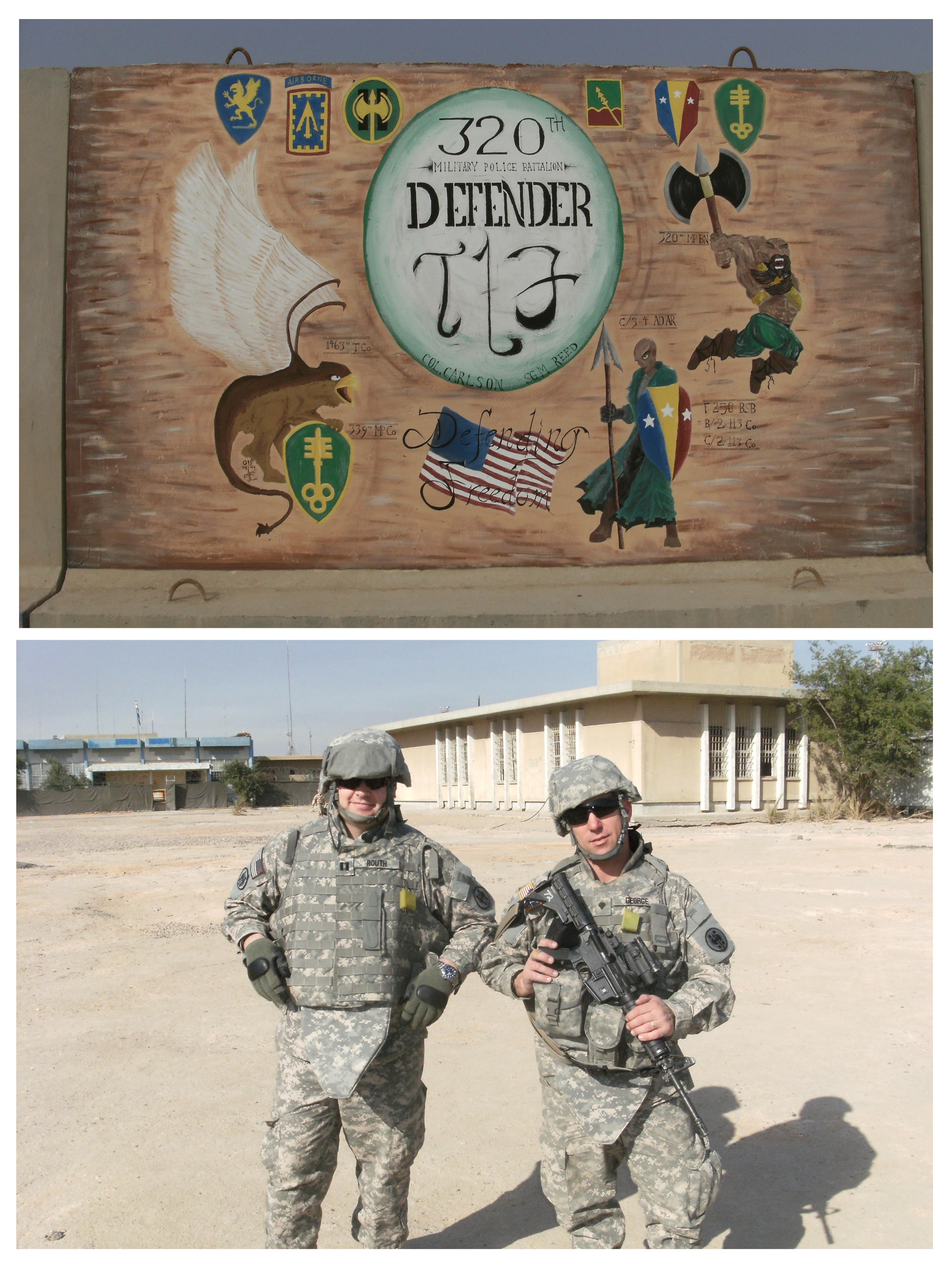
Bottom: 320th MP BN Unit Ministry Team on mission to Umm Qsar, 2008.


 Story of My Life