Helicopter Ride

I’ve had two deployments, one to Iraq and one to Afghanistan. Those two deployments could not be more different from one another. My Afghanistan deployment (2013-2014) was exciting, dangerous, and filled with travel all over the country. My Iraq deployment (2008-2009), on the other hand, was relatively boring. I spent the majority of my time behind a desk or visiting with troops on the base. There was very little excitement at Camp Bucca, which at the time was the largest Theater Interment Facility in the world. Besides going home on leave for two weeks about half way through the deployment, I only got to leave the base on one mission. Only one. It was a boring deployment, but in some respects that’s not a bad thing. And only once during my time in Iraq did I think that it might be possible I could die over there. Here’s that story.

I was on my way back to Iraq, returning from being home on leave for two weeks. I was delayed in Kuwait for two or three extra days waiting on transportation. It wasn’t the best place to be stuck, but it was almost relaxing to be able to recover from my time off before having to get back to work it in Iraq. I slept a lot between checking with the travel team responsible for getting people from Point A to Point B. If I remember correctly, we had to check in once a day at a certain time. If there wasn’t any transportation to where I was going, I would go back in 24 hours. Boredom set in pretty quickly, but that was cured with naps.

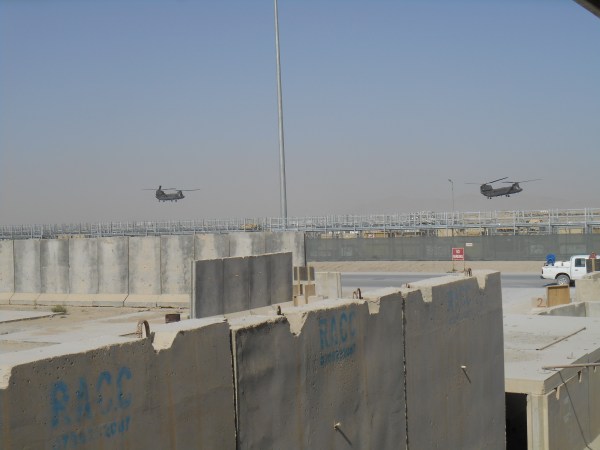
Finally, after a couple days of waiting, I had a helicopter flight going to Camp Bucca. It was actually three CH-47 Chinooks, which we affectionately called Shithooks. All three helicopters were filled to capacity with personnel and gear.  All of us were going to the same place, a direct flight. I was in the last helicopter of the formation. We took off and headed north. I love flying in helicopters. It’s one of my favorite things I’ve done in the military.

The helicopter I was on didn’t seem to keep up with the other two. I could see the other two flying higher. I could feel mine ‘slipping’ like it was not wanting to stay in the air, like it would drop a few feet then go back up. I watched the tail gunner leave his position, talking to the pilots through his radio. The tail gunner opened a side panel above a passenger across from me and looked inside. He fiddled with some gadgets and reported to the pilots over the radio. All the while I could feel the helicopter doing its best to stay in the air, slipping and climbing, slipping and climbing. The guy next to me was fast asleep.

The tail gunner then moved to the center of the aircraft, climbing to the top off all the duffle bags and opened another panel in the ceiling. He banged on some pipes and fixtures with his fist, shook his head, and kept talking to the pilots over the radio. I could see just the slightest concern in the tail gunner’s face, but nothing alarming. I could see the other two helicopters were considerably higher than mine. I guess the good news would be that we would not fall as far from our lower position. The bad news would be that we were in closer range for small arms fire if there were anyone out there that wanted to take a shot. I watched all this, taking it all in, repositioning my body so that if we did have to make a hard landing or crash, my spine might not be broke in two. All this while the guy next to me slept peacefully.

Eventually we made it to our destination, the helicopter I was on did land somewhat hard, just short of the landing pad, then rolled up on to it. We gathered our gear and exited out the rear of the Chinook. I had to wake up the guy next to me and let him know we arrived. The other two helicopters took off after  being emptied of passengers and gear, but the one I was on stayed on the ground. It would be there until the next day when a repair crew could take a look at it. I don’t remember the exact statistics, but I do remember that most U.S. military deaths involving helicopters in Iraq during that time were due to malfunctions, poor maintenance, or weather, as opposed to enemy engagements. I’m glad I didn’t get to see that play out.

I wasn’t worried about dying, but I was aware that I was in a position that it could happen, even if only remotely. It didn’t bother me, it was more surreal than anything, watching the tail gunner lose a little confidence in the aircraft. This is actually one of the stories I like to tell, probably because the rest of my deployment to Iraq was so boring. The one thing I kept thinking about during the flight was whether or not I should wake up the guy sitting next to me. If we were going to crash, would he want to know in advance? Would it freak him out? Would he be upset if we crashed and I hadn’t woken him? Yep, those are the things that went through my mind during the time that it was possible we might fall out of the sky. It’s kind of weird, right? Would I want to wake up in that situation? Would you? I feel like that situation for me was more of a moral dilemma than a life or death situation. Did I have any kind of duty to the guy next to me to wake him up? I still don’t know the answer to that. But that does remind me of a funny story of being at Bagram, Afghanistan, in a tent, half asleep. In my groggy state I heard a whining generator or truck or something along with large shipping containers being moved and banged around. I woke everyone else up in the tent thinking we were under attack again. False alarm.

My different doctors and counselors over the last 9 months agree that my PTSD most likely started in Iraq, but I am certain the helicopter ride is not the genesis of it. There were other things far worse in Iraq than that helicopter ride that I can trace my PTSD to, images that sometimes are front and center when I close my eyes, even though I try to not remember them. Then add to that all the excitement from Afghanistan. I spent years denying I suffered from PTSD. I know now how bad that was for me. Bad for me that I wouldn’t admit to suffering from it. It almost cost me my life last year. I wouldn’t say I necessarily embrace having PTSD, but I definitely embrace the freedom I feel from talking about it, writing about it, and accepting it. I can’t change it, I can only learn to live with it and continue to tell my story.

Thanks for taking the time to read Story of My Life. Good day, God bless.

Dave
Rest In Peace, Billy

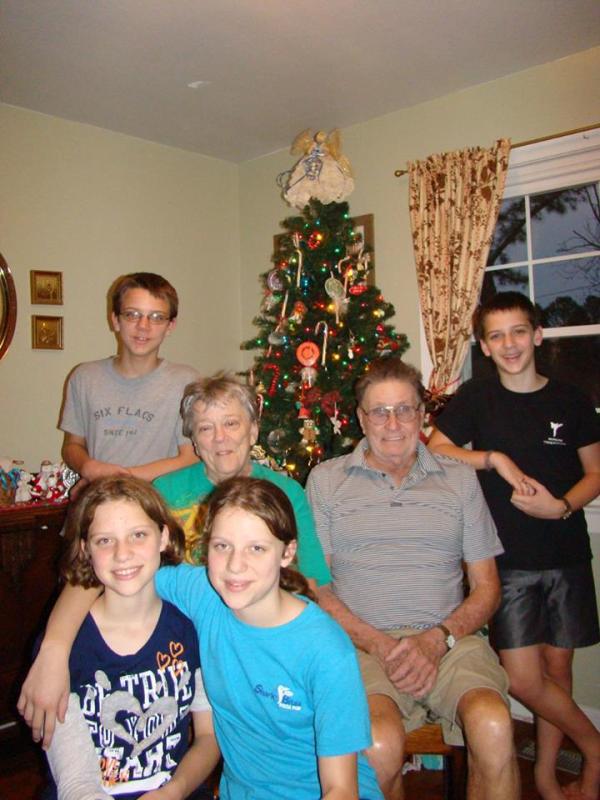
It’s been an interesting couple of weeks. I have been trying to figure out what to write about and as I finally have it, it changed. My step-dad passed away this morning. It was not unexpected, he had been sick for a while. Last weekend when I was visiting him and mom, he told me he was ready to go, ready to move on, ready to die. He told me that he had done everything he could to prepare for this and make it as easy as possible on mom. I guess he was satisfied with his preparations, he left this life, on his terms I imagine. That’ how he lived, I’m guessing that’s how he died.

I have mixed emotions when it comes to death. I’m not insensitive to it, I just don’t get all wrapped up in it. In this case, he is in a much better place, so it doesn’t seem too bad to me at all. He lived a long, productive life and will be missed. I just don’t really have the emotions any more when it comes to people dying. I think this might be what my psychologist referred to in one of our recent sessions when he said I show signs of being dissociative. I do tend to detach myself from things. It doesn’t mean I don’t feel it, I think it just means that I don’t let it affect me. The hardest part will be helping my mom. But I’m in a good mindset now to help.

Five weeks ago, or so, I would not have been able to help. I was a wreck in my own mind, not well. I was trying to salvage any sanity I had left at the time. It was five weeks ago that my step-dad began his final journey to the end of his life. He had been in and out of the hospital for years, but this was to be his swan song. Once or twice the last few years it appeared that he might be the end of life, but he was stubborn. He would only leave on his terms. And five weeks ago it was apparent that he was going to die sooner rather than later. And five weeks ago I would have been worthless to my mom. I know it sounds weird, and maybe wrong, but this is much better timing than five weeks ago. I can actually be of assistance. I feel like a dick for saying that, but I know some of you will understand.

See, the thing is, if I know I’m not in a good place to be able to help I shouldn’t be there. If I can’t function, how am I supposed to help anyone else? I know it looks bad to some, those few that don’t understand. But I have become well enough now to be able to say ‘No’ if needed, if I need it for me, for my own mental health. It’s not selfish, it’s reality. I can honestly say that now, today, and for the foreseeable I am much better and can be there for others as needed. It’s all a process, and I’m making it through it. It took a long time for me learn this: I have to put myself first sometimes to be able to be there for others. I make no apologies for that anymore.

A quick obituary. Billy was born in West Virginia in 1935. Died in Alabama today. He was a veteran of the U.S. Army, serving four years in the 1950’s. He was very active in coaching and scouting baseball for many years. He was captain of the deep sea fishing boat Lady Tina and a respected member of the Destin fishing community. The last decade or so Billy spent his time in the collectibles business, frequenting auctions and finding treasures. He is survived by my mom. He is also survived by many other family members too numerous for me to mention here. Rest in Peace, Billy.

To the rest of you, Good day, God bless.

Dave

PTSD is Contagious!

I’m still not sure how I got PTSD. I washed my hands after every time I came in contact with someone that had it. I used hand sanitizer, wore a protective breathing mask, and even kept my distance. Somehow I still contracted PTSD. Maybe it’s airborne, maybe that’s how I got it. Maybe I was sitting at a table with someone that had PTSD and they breathed on me. Maybe I touched a door handle that was infected by a PTSD sufferer. I’ll bet I loaned my ink pen to someone with PTSD and got infected that way. I’m not loaning my pen to anyone, anymore, ever again.

Does that sound silly? Of course it does. Mental illness is not spread like an infectious disease. But there are still so many people out in the world that don’t understand that. Those of us that suffer from any mental illnesses are sometimes looked at differently. People who don’t understand will often avoid the issue of mental illness with a sufferer. Perhaps they don’t know what to say or don’t want to trigger anything to make it worse. Maybe they don’t want to ‘catch’ the illness.

I can only speak for myself, but from what I’ve been reading, I think this is true for most of us that suffer from any mental illnesses. Don’t treat me differently. Don’t be afraid to ask me questions, either about my PTSD, depression, life, or my military service in Iraq or Afghanistan. Hey. Maybe that’s where I caught PTSD. I’ll bet it’s because I didn’t take my malaria pills daily like I was supposed to. Damn it. I think we figured it out, I wasn’t taking my Doxycycline Hyclate. If I had just taken my Doxy, maybe I wouldn’t have to take these other medications now.

But I digress. Back to whatever it was that I was talking about a minute ago. Don’t avoid me. Engage me, ask me questions. But give me space when I need it. Support my road to recovery by doing some research about what ails me. Help others understand that those of us who suffer from mental illness are still normal, just a different kind of normal, our own normal. Understand that my memory is horrible. Understand that my brain does not work like it used to, but it still works, just differently from the way yours might work.

Things have changed for me since being diagnosed with PTSD and major depression. I see things in a different light now. I take medications and go to therapy. Both of those help. Once I decided to share publicly with what I deal with in my life now, It felt like a weight being lifted off of me. I’m pretty messed up in the head sometimes, but I actually feel better about it now than ever before. None of this is totally new. Well, the diagnosis is new, but the symptoms have been with me for years.

In 2011, a year and half after coming home from Iraq, I talked my way out of being labeled with PTSD. I convinced the doctor that I was ok and was ‘let off with a warning’, like I was getting out of a speeding ticket or something. It was noted that I had symptoms of post-traumatic stress and ‘situational’ depression, but would not have to carry the label of PTSD. That was a relief. I didn’t want that label. I was in denial and I was proud to have dodged that bullet. In 2013, because of the 2011 incident, I had to get a psychiatrist’s approval to be able to deploy again. I honestly thought I was fine since I didn’t officially have the label of PTSD. The doctor agreed and I deployed again, this time to Afghanistan.

I know that was my last deployment and that my time in the U.S. Army Reserves will be coming to an end at some point due to physical and mental issues. And I’m ok with that now. I had only came to the realization that the army will be fine without me after my failed suicide attempt last year, and that I can live my new normal life, whatever normal is. I think normal is overrated. I’ve embraced being crazy, it’s a lot of fun. I know, the term ‘crazy’ isn’t politically correct. But neither am I.

As always, thanks for reading. Enjoy, give feedback, share if you like. Good day, God bless.

Dave

The Cost

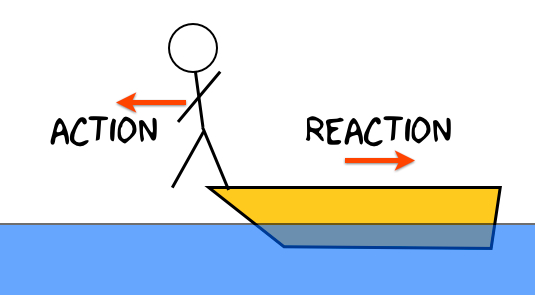
I was reading something recently and it said that there is no such thing as a free lunch. Everything comes at a cost. This is true. But to go deeper, I would suggest that in our lives, Newton’s Third Law of Motion is more apt: For every action there is an equal and opposite reaction. Not only is there no such thing as a free lunch, but everything we do has a response, not just in physics, but in life as well.

Everything I’ve done in my life has had an impact to my surroundings and or to myself, be it subtle or profound. This was a topic of discussion in my most recent session with my psychologist. I’ve been seeing a new psychologist for about four weeks now and I think it’s going well. He’s kind of a dick, but I like him. Here’s why:

     Doc: “What do you want to talk about today?”

     Me: “I don’t know, what do you want to know?”

     Doc: “That’s up to you, it’s whatever you want to talk about.”

     Me: “I don’t want to talk about anything. Why don’t you ask questions and I’ll answer them.”

     Doc: “Then why are you here?”

     Me: “Because I need to be.”

     Doc: “Ok. Then what do you want to talk about?”

Dick, right? No, quite the opposite. He’s making me think throughout the week of what I need to talk about instead of just seeing on my calendar that I have an appointment. This is an approach I had not experienced before. But I can see how it works. However, with this approach, there will be reactions. When I talk about something that happened, it causes me to think about it even after therapy. I spent time trying not to think about certain things, but there those things are again, rolling around in my head, bouncing off the walls of my mind. This is the reaction to this approach to therapy, I have to get it all out and deal with it and learn to put it back where it goes.

Same thing with my writing. I’ve shared a lot of stuff on my blog. Some of it good, some of it not so good. But some things will never be shared here. Each time I write about something, I experience the emotions again. The hardest one I’ve written was my post Battlefield (February 2016) where I walked you through my attempted suicide. It took six months after the attempt for me to be able to verbalize it like that. It was very rough. Re-living that time disrupted my sleep for days, changed my mood, and gave me a feeling of vulnerability. But on the other hand, it gave me an outlet. Writing has become my therapy. It may sometimes take me to bad places in my mind, but I’m getting it all out and learning how to put it back where it goes.

One of the most obvious reactions to any of my actions would be serving my country. I volunteered both times I deployed (once to Iraq, once to Afghanistan). The reactions for those actions are very profound. I traded my physical wellness and my sanity. I have problems with anger, relationships, crowds, driving, focusing, memory, anxiety, loud noises, and memory (ha ha, I put that in there twice because I still do have some of my sense of humor, though it’s probably darker than it’s ever been before). I can’t run anymore, I have problems breathing, and my body aches.

But the thing I miss the most is who I used to be. I used to always be able to find something good in most circumstances, make the best of any situation, and find something to enjoy in each day. I don’t see those things in me near as much anymore. I try. I fake it sometimes, but I’m far from the old me. I traded all of that that to go war. But I am still here and I know that some traded their whole lives to go war. I only traded part of mine. A lot of us that have traded part of our lives have had thoughts at one point or another that it would have been better to trade our whole life, instead of living with the pain and craziness of the reaction of our action. I was one of those people. I was one that tried to finish the job myself, like 22 other veterans a day do. I had a very hard time coming to grips with the fact that I was no longer the ‘me’ I used to be. I’m getting better with that now, but it has been a hard process to go through.

And I will continue to navigate this process. My life will continue to be subjected to Newton’s Third Law of Motion. I will continue to get things out and deal with them and learn how to put them back where they go. Thank you for taking the time to read the Story of My Life. I welcome your feedback.

Oh, and I have a lot of stuff to talk about during my next appointment with the doc.

Good day and God bless.

Dave

The Fear in the Eyes

During my time in Afghanistan I went on almost thirty missions from my home base. Sometimes to other bases within Kabul, sometimes to the opposite end of the country. We traveled in a variety of ways, including up-armored, non-tactical vehicles (NTVs), helicopters, and airplanes. On one mission that was very close to our home base, we walked. That was a wonderful experience, despite almost being run over by a motorcycle. I recorded the whole walk my camera that I strapped to my body armor. I found out later that the unit I was part of was not authorized to walk outside the gates. That caused quite a stir, eventually brining on policies and memos that everyone in our unit was made aware of, which ultimately changed the procedure by which our unit traveled when leaving the base. Some people work on policy change, I actually caused it.

For almost every trip we went on there was always some cause for concern. Travel is dangerous enough in Afghanistan, not to mention some of the places we visited were more targeted by the enemy than my home base. My home base was actually fairly safe compared to most other places over there. Most trips that took us out of Kabul resulted in taking shelter in a bunker at some point, sometimes on multiple occasions each day. The most explosions I heard in any one attack were seven, at a base in the far western edge of Afghanistan, not far from the Iranian border. Trips to Bagram would often also include hearing small arms fire coming from somewhere off base, usually in the evenings.

Very few things I experienced over there bothered me at the time. There was something normal about it. We were there to do a job and the enemy would try to kill us, if that’s normal. To be honest, I miss that normal, it was easier than my new normal. But there was one event over where that it occurred to me that I might possibly not make it home in one piece. During one attack when I was at Kandahar Air Field, the explosions were getting close. The first one shook the building pretty good that I was in, but not the closest boom I had ever felt. Soon after, the second one came in, shaking things off the shelves making a mess on the floor. That one, at the time, might have been the closest boom I ever felt. I ran outside, still getting my gear on, headed for the bunker. The third explosion was close. Most definitely the closest explosion I have ever felt. The enemy was ‘walking them in.’ From the mountains, they would fire, watch where it landed, then fire again, getting closer with each munition launched. I remember thinking that if there were a fourth one coming in, it would be right on top of me.

Even in that experience, I was ok for the most part. I don’t think it bothered me until much later, after I had returned home. Yes, it was a little scary. But even that was not the worst fear I experienced in Afghanistan. Without giving classified details, my home base was second on the list of a very credible threat within Kabul. The top target on the list was across the street. If the threat ended up being manifested and carried out, our base would have been wiped out completely. It was just another day to most of us. There was always some threat from somewhere about something, and always aimed at us. It was the life we lived, we got used to it. It was our normal and this threat didn’t really bother me any more or less than any of the others.

What did bother me is how leadership reacted to the threat, one person in particular. I always resisted wearing my body armor when I could get away with it, unless I didn’t have a choice. I always felt more comfortable being able to move around if needed. I also didn’t wear my seatbelt in the convoys unless we were still on a base. There was just something calming to me about being able to move without restraint. One evening, during the colossal threat, I was walking back to my room, without my body armor on, of course. One of our leaders asked me why I wasn’t wearing my gear. I explained to him my desire to remain unencumbered. When he ordered me to wear my gear if I were to be outside I could see fear in his eyes. The man seemed to have no confidence. I could hear the distress in his voice. I had never seen him like that before and to be honest, I lost a little respect for him. He was a good man, had always had an air of confidence about him, and was a good leader. I liked him. But you cannot be a leader at that level and show that kind of fear. His anxiety about the threat was so obvious that it had a more negative effect on me than any of the other life threatening things that we encountered in Afghanistan. If he wasn’t confident, how could I be? It was psychological. Seeing his fear was more daunting to me than any physical harm that I might have faced. Being scared is normal. But when you lack any confidence and it shows to that extent, you have failed as leader.

Other people watch you and their emotions can be persuaded by how you handle a situation. It’s ok to be scared. It’s ok to admit when you’re scared. But when you let fear control you, you fail. Bravery does not mean you don’t get scared, it means you do what you have to do with confidence anyway. To me, it was a lot easier to manage my fears in Afghanistan than it was after I got home. I knew what to be fearful of there. At home my own mind had become my biggest fear. And I let my fear of my thoughts consume me and it almost cost me my life. I was scared of myself, for good reason. I now have a whole new set of fears that I never experienced before. But I’m getting my confidence back in myself and learning how to deal with it. It’s a bumpy road, but counseling is helping and writing has become my best therapy.  Don’t let fear destroy your life.

Thank you for reading Story of My Life. As I said, I write for my own therapy, I share in case it helps someone else. Feel free to share this. Follow this blog for weekly updates if you want.

Good day, God bless.

Dave