Language, War, and the Bay of Bengal

I love language. I love communication. I love writing and talking. I enjoy words, their meanings, their roots, and how they fit into our lives and how we get our messages across to each other. When I first embarked on my anthropology degree, I wanted to be a Linguistic Anthropologist. Unfortunately, the university I went to didn’t offer that so I chose Cultural Anthropology and loved it. Language and culture go hand in hand and the more I got into my studies the more I enjoyed it. But in the long run, it didn’t matter since I quit school two semesters shy of my degree. But that’s a story for another time.

I think I’ve been to fifteen different countries. Some as a military dependent, some as a Soldier, and one or two just because. I have always liked learning about other cultures and I try to pick up a few words of their language when I’m there. Usually, “Hello,” “Thank you,” “Please,” and phrases like that. I think India was the most interesting place I have ever been. The different cultures I encountered within that country drew me in and the amazing and colorful people there fascinated me. The languages they spoke were different from anything I had heard. Yes, languages. The statistic I found states that India has 29 individual languages that are each spoken by at least one million people. There are many others languages that weren’t listed because the site said not as many people speak them. As many as 100 languages are spoken in India daily.

Our interpreter spoke four languages which helped us greatly in our travels. However, we did end up visiting a village on a beach on the Bay of Bengal that had been devastated by the Tsunami of 2004 and our interpreter didn’t speak their local language. We interacted with the people there, but we could not fully communicate. We had no idea what the locals were telling us but it was no doubt how their village was forever changed by devastating waves. In a later event, the interpreter was keeping up brilliantly in translating a sermon given by the leader of our group. Right up until he said, “You can’t teach an old dog new tricks.” The interpreter looked right at the speaker and said, “Beg your pardon?” That phrase had no adequate translation to Telugu, the language of the people we were speaking to. This intelligent, very well-educated translator could not convey the simple phrase “You can’t teach an old dog new tricks.” He knew the words and what each word meant. But they had no meaning grouped together in that order in the translated language.

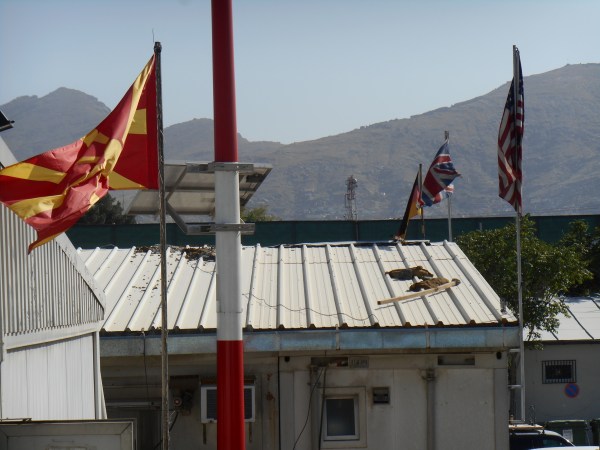
While deployed to Afghanistan, one of my favorite places I got to visit was the ISAF Headquarters base (International Security Assistance Forces). It was very close to the base where I was stationed at in Kabul. It was also connected to the U.S Embassy which was very cool to visit. I probably went on ten missions to ISAF. Most of the countries that were participating in the war effort had troops at ISAF Headquarters. I really enjoyed interacting with coalition and NATO forces. All of us from different cultures speaking a different a tongue, but on a common mission. I’m proud of the Bronze Star I received while there, but I think my favorite ribbon on my uniform is the NATO ribbon. It shows that I was part of something bigger than all of us, even if we couldn’t always understand each other.
DSCN3337

And of course, with that many troops from that many different countries there were some language and communication issues. Most notably, and to be honest the most entertaining to me, was a conversation I watched between two Service Members from different countries (one was Italian and I can’t remember the other). Both men spoke some English, enough to be able to talk to me for the most part. But their broken English was not good enough to talk to each other and it was the only language they had in common. They were actually arguing about something in broken English, not getting anywhere with each other. I was no help because I couldn’t figure out what their disagreement was. But it was amusing to me. Sorry, I find things funny sometimes that aren’t always funny to others.

Speaking the same language does not always mean two people can understand or effectively communicate with each other. Sure, one might know the words that are being spoken, but he might not understand the meaning of what is being said. That’s a hard concept to grasp. Even as I write this, I’m trying to figure out what I’m saying, trying to say it in a way that is logical to you.  It should makes some sense, then, that people get upset when arguing. A person understands the definition of each word being said, but he can’t grasp the concept behind all the words together, in the order they come, or the meaning portrayed by the speaker. Perhaps the speaker should say them louder and be more animated, maybe that will help. And, that’s how the fight starts. I think I do that sometimes when trying to describe my PTSD to people who cannot comprehend or begin to understand. It’s frustrating. I know it’s not from lack of trying. But people who have never experienced what’s going on in my mind, can’t fully understand what I say when I talk about it. Much like the two Service Members from different countries trying to figure out their problem. And no different than the locals on the beach in India that we could not understand at all.

But I still love language. I love putting all the words together and giving them meaning and feeling. Whether you understand me or not has no bearing on what I write. I’m doing this for my own good, for my own therapy. I do hope you enjoy it and get something out of it. I always appreciate feedback, good or bad. Mostly, I hope you have a better understanding of what many of us struggle with daily. We are doing our best to communicate, but it’s hard sometimes, especially when often times we are not understood.

Thanks for reading. Good day, God bless.

Dave

The Storm

20160814_180324

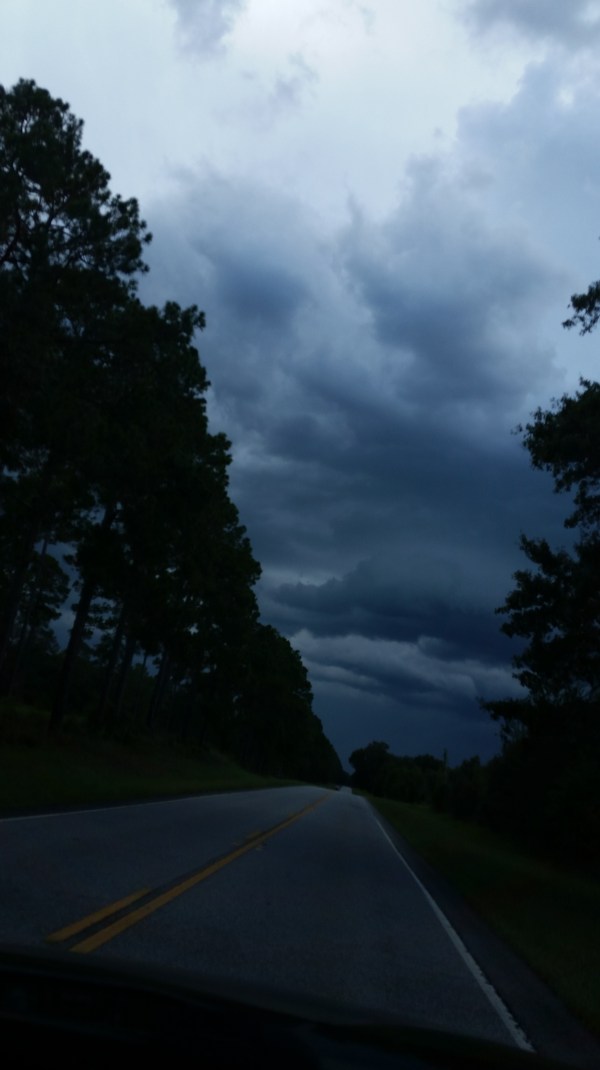
The road ahead seemed to be getting darker, even unstable as the clouds reached down onto the horizon. A brilliant bolt of lightning struck somewhere miles ahead, right in his path. The vivid image was both beautiful and startling. Small drops of rain began to appear on the windshield as the sky became miserable, ready to unleash rage on the earth below. The treetops were swaying heavily in the wind fighting to stay in place. Leaves and pine needles swept swiftly across the road. He was driving right into the giant storm. There was no way around it on that westbound backroad in south Georgia. Things were about to get rough for him.

20160814_180746

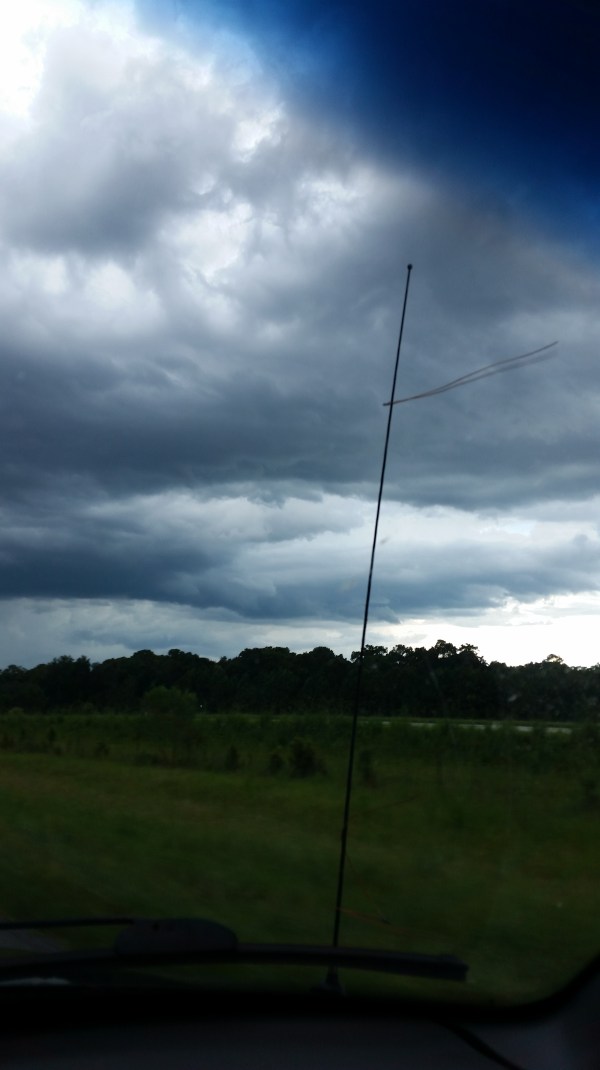
He noticed a lone pine needle on the radio antennae. It looked as if it were clinging for dear life. The odds were certainly stacked against it with both the speed of the truck and the wind from the oncoming chaos. He spoke out loud to the dangling pine needle, “Hang in there, don’t give up.” It was only another mile or so before the pine needle released itself and flew away into the swelling gusts and increasing rain. He knew that feeling. The feeling of just letting go because it was just too much to hold on anymore. He was also familiar with the saying, “Hang in there, don’t give up.” He had heard it many times from well-meaning friends. But it doesn’t help, it doesn’t change anything. It’s just something people say when they don’t what else to say.

20160814_182931

Off to the south the clouds were still mostly white and peaceful. The storm seemed to be only in his path. He wanted to be on a different road, somewhere that didn’t have a storm looming. But he was stuck right there in it. It was a disheartening feeling to watch the turmoil come at him and not be able to change his path. There was no way to get another road. He would have to stay on this one through the storm. He wanted to know what made him choose a road with such a spectacular and dangerous event to navigate through. He wondered if in fact he chose this road or perhaps the path he was on in life had chosen it for him. Did he have any control of his course at all? Or was he only able to suffer through it and get to the other side of the storm as best he could?

20160814_181523

The rain began to come down in sheets. His hands gripped the steering wheel, his eyes squinted in an attempt to focus. The truck was pushed around by the daunting wind. He corrected his course and let off the accelerator. It crossed his mind that he could let go like the pine needle had done before and finish what he failed at a year ago. Surely people would know it was an accident. He wondered who would see through the façade and convenience that the storm would actually be the cause of his death instead of him letting go. None of that actually mattered because his survival instincts had kicked in and he did not want to die. But he did want to be out of the storm at most any cost. He questioned whether he could handle the intensity of this storm since previous storms almost killed him.

20160814_181511

The rain became so heavy that he was driving 30 miles per hour below the speed limit. He considered stopping, but there was no suitable place to pull off the barren road. He was in between towns, only corn fields and livestock at that point. He could barely see in front of his truck. Then he saw the lights of a vehicle traveling in the opposite direction heading towards him. He wanted to stop and flag them down and ask how long this storm would last. The vehicles slowly passed each other without any communication or acknowledgement. Neither driver would be able to tell the other how much longer the storm would last. They had each been tossed around in the squall too long to remember when or where it started. And neither one could know when the swirling storm would end for the other.

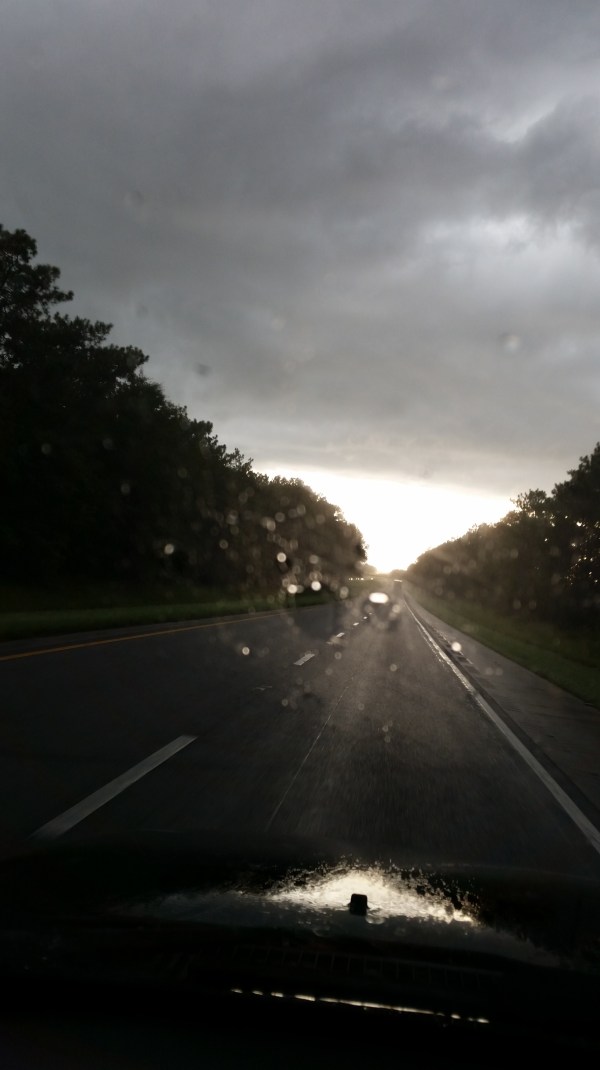
The wind and rain made one last push to make him lose his way and give in to letting go. His knuckles were white from his hands gripping the steering wheel with all his strength as the lightning made its last effort to derail what was left of his confidence in making it through to the other side. He flinched but kept control. Then, almost as quickly as the storm appeared before him, it was now behind him. He made it.

20160814_185322

The rain was gone. The wind had calmed. The trees now stood still. The road no longer seemed as threatening. He took a few deep breaths and began to relax. He could see sunlight between the clouds and the horizon. The storm was ending but the sun would be setting soon. He made it through just in time for the darkness set in. The joy of the storm now behind him faded quickly thinking about what the darkness can bring. This was a repeated cycle in life. Storm, darkness, storm, darkness.  He hoped he had enough strength left in him to survive the darkness as he did the storm. But he was exhausted. He just wanted to rest. But when?  Will he ever truly rest?

David E. George, 2016.

Suicide Intervention

It was during my first deployment that I had my first real-life introduction to suicide intervention. I was deployed as a Chaplain Assistant with my unit to Camp Bucca, Iraq (08-09). At that time I had only the minimal training in suicide intervention. I did not understand why someone would want to take their own life and, I am ashamed to say, I sometimes wondered if the person was faking it. It was an easy way to get to leave the desert early for people who didn’t want to be there. I had yet to experience a point that low in my life and I just didn’t understand when someone said they wanted to kill themselves.

During that deployment I took control of three weapons of Service Member’s that showed signs of suicidal ideations. Two of them were preventative measures before they went to the chaplain for counseling. But one was considerably more serious than that. It was real. I still thought in the back of my mind this guy was just trying to get out of work. But I knew him, we had become good friends. And I knew he wasn’t ‘right’, that something was going on. He was changing and I didn’t understand why. I took it seriously, but his logic that he would be better off dead escaped me.

I talked him into turning in his weapon to the base arms room for a little while. I walked with him and his commander in silence. He and I had made a deal that he himself would be the one to give up his weapon, that no one would take it from him. It was important to him that he felt in control of relinquishing his assigned firearm. His commander signed some papers and my friend forfeited his gun. My friend walked away without saying a word to me. I spoke to his commander for a few minutes, assuring him that I would keep an eye on him.

The next day my friend had his weapon. I asked him about it. The paperwork had apparently been filled out wrong and since he was the one that turned it in, he was allowed to get the weapon back himself. I asked if he had felt better about life. He said that he did not. I told him to give me his weapon to which he replied, “You’ll have to take it from me.” I took two steps towards him in the office to come face to face with him and placed my hand on his weapon. He did not resist and I took it from him. I escorted him back to the arms room and turned it in properly. That would insure that he could not get his firearm back without his commander’s approval. I went back to my office alone, closed the door, and shed a few tears. The reality of these things that I could not understand were overwhelming.

My friend didn’t speak to me much the rest of the deployment. I felt like I had traded our friendship to possibly save his life. That is a fair trade. I don’t know for sure if he would have gone through with killing himself, but I also knew, even in my limited experience, that it had to be taken seriously. I hated that he felt like I took something from him that he considered important, that helped define him as a warrior, his weapon. And he hated me for it for a while, too, I guess. On a side note, for those of you in the military that think a chaplain assistant has a cushy job, there’s a lot more to it than you think. It can be an emotionally draing job which many people do not see the whole spectrum of what we do.

Since that time I have received specialized training in suicide intervention. I have taken part in more than a few interventions. I have also experienced that darkness first hand in my own mind. I fully understand now what my friend was going through. I may not relate to his particular circumstances, whatever those were at the time, but for the hopeless feelings that comes with wanting to die, I completely relate. I wish I didn’t. But I think it makes me better at helping people when needed.

I understand that each of us respond differently to various situations. What destroys me might be normal to you. I understand that in many cases the ‘reason’ for wanting to die is simply the straw that broke the camel’s back. I understand that no matter what I think, suicidal ideations must be treated as a real threat. I understand that there is no quick fix. I hate that part the most. I just want to be better again. But I know I will never be the person I was before I attempted suicide, it will just never happen. Maybe that’s the part I hate the most because I know I sure do miss the old me.

It was at least a year after returning from Iraq that I got a Facebook message from my friend saying thanks for what I did to help him. We still keep in touch from time to time. It turns out that I didn’t have to trade his friendship for taking his weapon. And now I understand why he reacted the way he did. Because I also lived it, and still do. Different circumstances, different setting, and different consequences. But I completely understand the feelings he experienced, during the deployment and the period that followed. I understand about pushing people away or shutting them out, I do it, too. I’m working on that, trying to do better. Or at least I want to do better.

For those that have been following the horrible life-rut I’ve been in lately, I can’t say that it’s getting any better right now. But I can say that I’ve stopped going in reverse with my thoughts and am ready to start moving forward again when it’s time. I had at least four conversations going the other evening on text or messaging when I was feeling pretty crappy about life, a low point. I don’t know if I were in danger of myself, but I do know my thoughts were not good. I don’t know how many of the people I was talking with had real suicide training, but I know the conversations helped. Point is, you don’t have to be a specialist in suicide prevention to help someone that is having those feelings. Just be there. That’s the first and most important step in an intervention.

Thanks for reading this week. I hope you get something from this. Good day, God bless.

Dave

A few pictures from Camp Bucca, Iraq, 2008-2009.

Recovery, It’s Not That Easy.

I received a lot of feedback from last week’s post. A lot of it came in private messaging and email asking how I was doing. Last week was rough and I openly shared about how bad it was for me and of the things going on in my mind at the time. It was not pretty. But I’m ok. I promise. I think I will have those kinds of thoughts once in a while, from time to time, perhaps for the rest of my life.

Let’s see if this analogy makes sense. I think I will battle suicidal thoughts the same way a recovering alcoholic battles his demons. This friend of mine that I’ve known for half my life now is a recovering alcoholic. I asked him one day how long it took for his urge to drink to go away. He had already been sober for 10 years at the time of that conversation. He said, “Never.” He told me that every day he thought about and missed drinking, but most days the thoughts were just in passing and barely noticeable. But every once in a while, he said, it was hard.

I think I’m in that boat with my mental illnesses and suicidal ideations. Honestly, most days are pretty good. But I will always know in the back of my mind that I tried to kill myself. I will forever know what it felt like to be that low and the possibilities of what could happen if I get that low again. I will always be at risk. I know that. I accept that and I do what I can to make sure I protect myself.

Most days are normal, whatever ‘normal’ is. Most days I look at my past in a way that I cheated death, a battle in which I won. Well, I haven’t really won yet, it’s an ongoing fight. Because every once in a while life becomes so completely overwhelming that I slip into the dangerous darkness of my mind. Even though the thoughts of a couple weeks ago were horrible, I ended up not doing anything to harm myself. I just needed some time for the process to run its course in my head.

One question that stands out from some of the responses last week is, “How are you able to share things so personal and put it out there for the world?” That’s a good question. It wasn’t easy at first to be able to put all the words together in a way that would make sense to more than just myself. Even in my own mind I had great difficulty trying to figure out what the hell I was saying and thinking. But once it started flowing I became very comfortable with it. I decided that I would write about my life because it is great therapy for me and I would share to the world in case it helps someone else.

I fully understand that not everyone can do that. I get it. There are a million things going on in my life that I don’t share here. There are some things I will never share here. But some of it I need to, I have to. I have to get it out and try to make sense of it. When I post to my blog every Saturday it helps me, whether people read it or not. I get considerable satisfaction in being able to put my thoughts in order to be able to share stories of my PTSD, attempted suicide, the occasional dangerous mindset, highs and lows, depression and anxiety, the good, the bad, and the ugly. All the things that are The Story of My Life. Many things that others can relate to, but can’t share themselves.

Two very stressful weeks are behind me, but I wouldn’t say that life is all that great right now. And to be honest, I don’t see it getting any better any time soon. As a matter of fact, I can guarantee that it will get worse before it does gets better. You think I would be used to it all by now, but I’m not. I hate it. I hate the situations that I’m in. I hate that I’m not capable of doing the things I used to do. I hate that I have little motivation, low energy, and almost no desire to interact with the outside world. I don’t even want to write much anymore.

Even though I know it can’t happen again, I miss being deployed. I miss being in Afghanistan. For many of us, that is a normal feeling after coming home from war. We miss the camaraderie. We miss the feeling of knowing that someone always has our back. I know for me, I miss the chaos, the danger, and the excitement of being there. There is a weird high from being surrounded by the unknown that each day offered over there. Maybe I’m crazy, but I miss it. And I know that I’m not alone. I keep up with many of my friends I deployed with and many of them feel the same way. There was a strange level of comfort that I just don’t have anymore.

I’m sure all of that contributes to what is going on in my brain right now, this feeling like I don’t belong here, that I can’t adapt, that I can’t find a normal that I’m at ease with. I know my past experiences do not cause the bad or uncomfortable things in my life today, but I certainly do not deal with said things like I used to be able to. Not coping well is simply compounding everything. One thing after another, each making life worse than the one before. Or at least the feeling of life being worse. And I hate it. At some point it has to get better.

Until then, I’ll keep doing what I’m doing. Thanks for reading this week. Hopefully, next week’s post will be more positive. But no promises. Good day, God bless.

Dave
20160715_145030

Update and Excerpt

If you saw my post from last week, here’s an update: It hasn’t gotten any better. Basically, if it can go wrong, it has. On the flip side, a lot of things have also fallen into place. Don’t patronize me with, “Oh, good, look at the positive.” The only things that are falling into place are a direct result of things that have gone wrong. I’m not making any forward progress, actually, going in reverse lately. It is not exactly balancing out. The bad is outweighing the good to me this week. The low point was last Friday. It was the lowest I’ve been since my failed suicide attempt last year and many of the same thoughts about death ran through my head. I spent about 10 minutes on the side of the interstate with my broke down pickup truck debating life and death before I called for a tow truck.

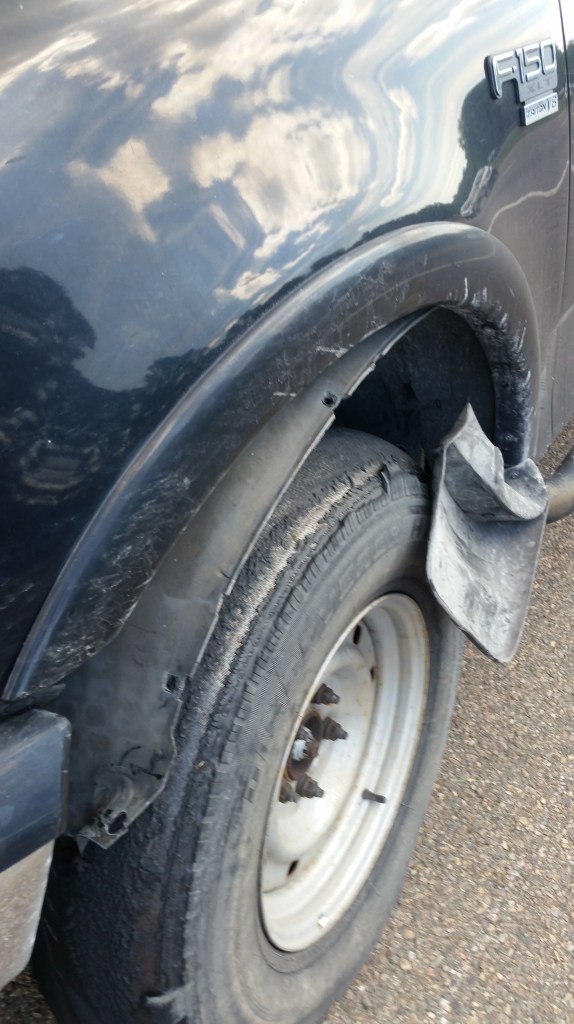
I blew a tire. At 75 miles per hour. Front driver’s side tire. It messed up the wheel well, the bumper, the hard-plastic mud flap behind the tire. And surely messed up the front end alignment, as one tire was facing straight and the other tire was off at an angle. Somewhere around Tuesday I realized how lucky I was that I maintained control of my vehicle at that speed and didn’t get myself killed. It sounded like an explosion and felt like I had run over something. The weird thing is, it was just the steel belts that flew off. The tire still held air, but the truck was not drivable. The tow truck driver said he had never seen a tire do that before and still hold air.

Whatever. I’m alive. Moving on to other things. Last week I mentioned that I might do an excerpt from the book I’m writing. I think I’ll do that since I don’t much feel like writing more about my week. Let me set it up for you. First, this is fiction. Yes, I use my life experiences and those of others, but the characters are fiction, this is not an autobiography. The main character, James, is a young war vet trying to figure out life after he failed to kill himself. The story I am writing will take you through the process and days that follow his attempted suicide and him coming to terms with the fact that he is indeed still alive. This excerpt is from Chapter 3.


James laid down in his bed and stared at the ceiling. He was restless and rolled to his side. He saw the dresser and remembered thinking about what reason they would want him out of his room earlier. He jumped up and opened the top drawer. It was still empty. He proceeded to check the rest of the drawers. Nothing. He was still paranoid. He looked under his bed, around the sink, peeked inside the shower room. He looked around the other side of the room where a roommate would be if he had one. He found nothing to confirm his paranoia but also found nothing that would put him at rest. He laid back down and tried to figure out the dream from last night. Perhaps he was dreaming within his dream and all this was just still a dream. But he knew this was real. And he knew he was really losing his mind.

James went back to the bed and laid down. In his head, he recounted the story he told to Dr. Andersen. Every detail. Every word. Every moment from last night that he could remember, he told the doctor. He hated that he survived, that he was still alive. He wondered what he did wrong, it should have worked. Or at least he thought it should have. He was becoming upset that the doctor didn’t fix anything for him. All that talking James did and Dr. Andersen didn’t fix a thing. He pondered the motives of Dr. Andersen. Was her plan to get him to talk, tell his story, and admit that he wanted to die, just so they have a reason to keep him longer? He realized that he got suckered into talking. How could he not see that coming? It was a scam and he fell for it.  James was angry with the doctor, the cops that brought him in, the paramedic that checked him out, and everyone he encountered since his incarceration to the psych ward. But most of all, James was angry with and hated himself. All James wanted to do was die. He couldn’t even do that right. And since his best effort had failed, he was now stuck in the psych ward.

James did not trust anyone in the psych ward, except maybe Nurse Angie. But even his trust in her was conditional and almost nil. He was paranoid of everyone and their motives. To make matters worse, he was now becoming paranoid of his own mind and thoughts. He wasn’t sure he could trust what his own mind was thinking or if it was even real. The dream he had was all too real. What if he did in fact venture to some other hidden place in the mind and that’s where his truth was hidden. What if he had become immortal and could not kill himself? Just thinking about these things, James felt crazy. He felt he had no control over his thoughts. And he certainly wasn’t free to have control of leaving where he was. He was trapped in his mind and in the hospital.

A nurse he hadn’t seen before showed up in the doorway to his room. She scanned the clipboard she was holding. “Hello,” she said, looking up “you must be James. How are you feeling?”

“I feel like I want to get the hell out of here,” he said in a dry monotone.   “Where’s the other nurse that was here earlier? From when I woke up?”

The new nurse looked down at her clipboard for a moment then asked, “Was it Angie? If that’s who it was, she’s checking on some patients in the other ward. But we’re all here if you need something and we’ll all be checking on you.”

“Great,” James said, showing no interest.

“Did you get shown around? Did you see the daily schedule? Were you shown how to use the phones when they’re on between group sessions?”

“I’m not going to group sessions,” James said. “I already told the other one. Ok? I really don’t want to be around anyone, thanks.”

“Well,” she started, “going to group sessions will be a way to show that you can function around other people so that you can get out of here. I highly recommend going. The better you do in groups and the more you go to, the quicker you get out. Why don’t you go down the hall and at least be around the other patients and get comfortable. There’s a group session starting in 10 minutes. You can make a good start on the road to getting better and out of here by going to it. It’s not as bad as you think. Let me know if you need anything, I’m Sue. I’ll be here until y’all go to dinner.” Sue smiled at him and left the room to continue her rounds that required all patients be check on every 10 minutes.

James laid there thinking about life and about how much easier it would be had he succeeded in his suicide attempt. He had no desire whatsoever to go to a group session. He also had no desire to be stuck in the hospital. He had no desire to be alive. How did he get in this situation? Could he find a way to escape or would he have to wait until they decided to release him? And how long would that be? He was frustrated and hated his life. He tried hard to figure out how he went from being a warrior to the sorry excuse for a man he was now. He didn’t even recognize himself anymore. He was a Soldier, or at least used to be. And he was good at it. He never feared anything and now he was scared of himself. “Who am I anymore?” he asked out loud as if someone or something could magically give him the answer he wanted.


It’s a work in progress. I know it needs some work, but it’s coming along. Thanks for reading. Good day, God bless.

Dave